We take pride in our center and institute partners, which provide research, advocacy, care, and training to improve child health and equity. These entities call the UW Department of Pediatrics their academic home, and we provide comprehensive administrative, financial, and operational support to help their people and programs thrive. These alliances are intentional and meaningful – each brings unique expertise, innovation, and passion that enrich our work and strengthen our collective impact.
Center for Firearm Injury Prevention
Every day in the United States, more than 300 individuals are injured or killed by firearms. The Center for Firearm Injury Prevention (C-FIP) works alongside community, research, and policy partners to equitably prevent firearm-related harm and improve health. Drawing upon four decades of research, C-FIP seeks to create transformative change through genuine partnership with those most impacted by this public health and safety challenge. Their work centers on:
- investigating the determinants of firearm death and injury at the individual, community, and societal level.
- evaluating the effectiveness of firearm laws and policies.
- assessing the consequences of firearm violence.
- developing strategies to reduce the toll of firearm-related harm among people of our state and country.
Visit the Center for Firearm Injury Prevention
Center for Indigenous Health
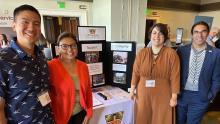
There is a shortage of Indigenous physicians in Washington state and neighboring regions. The Center for Indigenous Health (CIH) seeks to expand opportunities for American Indian and Alaska Native (AI/AN) premedical students, medical students, and academic faculty through the UW School of Medicine, and increase the AI/AN physician workforce for Washington’s Tribal and Urban Native communities. These efforts improve the quality of life for Indigenous people by addressing the physician shortage and the health disparities impacting Indigenous communities. CIH is committed to:
- inspiring K-12 Indigenous students and helping them prepare for a path in medicine.
- increasing the number of Indigenous students trained by UW School of Medicine by helping pre-medical college students navigate and prepare for their careers.
- bolstering support for current Indigenous medical students to foster community and ensure their success.
- championing support for Indigenous residents, junior faculty, and new physicians.
Institute on Human Development and Disability
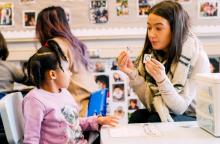
A global leader in its field, the UW Institute on Human Development and Disabilities (IHDD) enhances the lives of individuals with developmental disabilities through cutting-edge research, education, clinics, community involvement, and advocacy. Over 600 people from various academic departments work through the IHDD on a broad spectrum of issues relevant to individuals with developmental disabilities. Their programs and services include:
- evaluating and supporting individuals and families navigating neurodevelopmental disabilities through comprehensive and interdisciplinary specialty clinics.
- providing services aimed at improving independence, communication, social interaction, and well-being.
- advancing our understanding of intellectual and developmental disabilities through significant research and scientific discoveries.
- empowering individuals to become skilled professionals, practitioners, and advocates in the field through training and leadership opportunities.